NHMRC success

Congratulations to 3 CFBD CIs for being awarded NHMRC Grants totalling almost $3 million.

Prof Ray Norton has been awarded an NHMRC Development Grant worth $753,140

His project is titled “Development of a Kv1.3 Potassium Channel Inhibitor as a New Class of Treatment for Diabetic Kidney Disease”. Diabetic kidney disease (DKD) is a major public health problem, which is associated with kidney failure, cardiovascular disease and premature death. Current therapies often fail to stop disease progression. There is an urgent need for innovative strategies to prevent, arrest and reverse the development of DKD. Ray’s project will advance the development of a novel therapeutic for DKD that acts by a different mechanism from current drugs and has shown considerable promise in animal models of DKD.

Prof Michael Kassiou was successful with NHMRC Ideas Grant

His project titled “Developing Senolytics for treatment of Amyotrophic Lateral Sclerosis” received a total of $1,037,875. When the body senses damaged cells, it can usually eliminate them, but dangerous senescent cells upregulate proteins such as Bcl-2 and Bcl-xl which make them resistant to the body’s elimination processes. These senescent cells accumulate in amyotrophic lateral sclerosis (ALS). We are developing novel Bcl-2 and Bcl-xl inhibitors which selectively eliminate these senescent cells without eliminating healthy cells to examine the role of senescence in ALS and to develop new ALS treatments.

Prof Joel Mackay also received NHMRC Ideas Grant

For his project “RaPID assessment of the chromatin remodeller CHD4 as a therapeutic target for hemoglobinopathies using a new target validation strategy”, Joel has been awarded $1,133,816. Recently, the enzyme CHD4 has emerged as a possible therapeutic target for hemoglobinopathies. However, no molecules exist that specifically inhibit its activity. The goal of this project is to develop specific chemical probes to assess the potential of CHD4 inhibition for the treatment of hematological disorders. The work will also provide proof-of-principle for a new strategy that we propose for faster validation of therapeutic targets.
Huge success at the 2023 Ramaciotti Biomedical Research Award

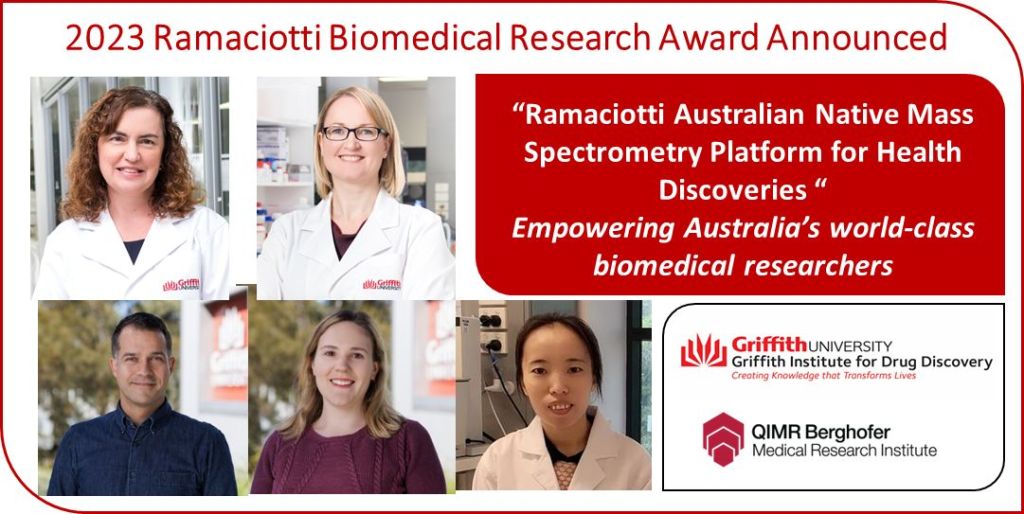
Congratulations to CFBD CI Professor Sally-Ann Poulsen, ECR Dr Louise Sternicki and the team at GRIDD for being the recipient of the prestigious 2023 Ramaciotti Biomedical Research Award.

This $1 million grant from the Ramaciotti Foundations is awarded every two years to a group or individual undertaking biomedical research. The award will fund the purchase and use of a first-in-Australia, cutting-edge new technology – native Charge Detection Mass Spectrometry ‘nCDMS’ that will enable characterisation of complex and large biomolecules and biomolecular interactions that cannot be analysed with existing infrastructure in Australia. The Ramaciotti Australian Native Mass Spectrometry Platform for Health Discoveries will be nationally accessible through the NCRIS Therapeutic Innovation Australia (TIA) platform. CFBD CI Professor Sally-Ann Poulsen was the lead investigator with the GRIDD team together with Professor Kathy Andrews, Frank Sainsbury, CFBD member Dr Louise Sternicki and Miaomiao Liu.

More information can be found here.

Funding Success for CFBD Director

CFBD Director Prof Martin Scanlon received funding through CSIRO’s CUREator – a national biotechnology incubator run by Brandon BioCatalyst to support the development of Australian biomedical research and innovations.

The project is led by Prof Bernie Flynn (Monash), Prof Colin Pouton (Monash) and CFBD Director Prof Martin Scanlon. The funding will support their aim to respond to the risk of viral and bacterial replication through the development of a platform capability in polynucleotide fragment based drug design (pFBDD) that is better able to discover small-molecules for targeting RNA and DNA.

CUREator is delivered through an initial $40m in funding from the Federal Government’s Medical Research Future Fund (MRFF) and $3m from Australia’s national science agency, CSIRO. CUREator was established by Brandon Capital in 2021 as a new approach for bridging the gap between where research grant funding ends and commercial investment begins.

Loving the industry life – Yildiz’s placement experience

Post written by Yildiz Tasdan, PhD Candidate at the CFBD Monash node

About four years ago, I was interviewed for the ITTC PhD Program on the day I submitted my Master’s thesis in Singapore. Now, I am in England doing my industry placement at Vernalis as part of my PhD at MIPS in Australia, and I have just returned from the US for a conference. I would not think a career in science would give me so many travelling opportunities. All these became possible thanks to the support from ARC CFBD.

My placement started at Vernalis, England four months ago, and I am absolutely loving the industry life. The first thing that surprised me here was how enthusiastic everyone is about research and training. I have been working on the synthesis of an extensive library of compounds using flow chemistry which provides excellent efficiency in the synthesis. I came here with no prior knowledge of flow chemistry. Thanks to the excellent training that my mentors provided, I am getting confident with my knowledge in the field and am willing to learn more. I am also learning about drug design and biophysics from the experts here. Everything I am learning here is in addition to the fundamental knowledge I gained in the first three years of my PhD at MIPS. The ITTC program prepared me for this placement very well, and ultimately it has been preparing me for an industry career.

CHI Drug Discovery Chemistry Conference Poster Presentation Award Ceremony (left to right; Anjani Shah, Yildiz Tasdan, An-Dinh Nguyen)

I was also fortunate to receive the CFBD travel grant to attend the CHI Drug Discovery Chemistry conference in San Diego. I had an opportunity to communicate my research with industry experts from various disciplines and expand my network. I attended two short courses and over 30 talks in 4 days, which was overall very fruitful. Through my poster presentation, I received the best poster prize as well.

I recommend every student and ECR follow the opportunities ARC CFBD offers and reach Anne to propose any training ideas and ask for additional support.

Thank you to Yildiz for writing this guest blog for CFBD and for sharing her experience with us!

Fellowship for David Hilko (Griffith Uni)

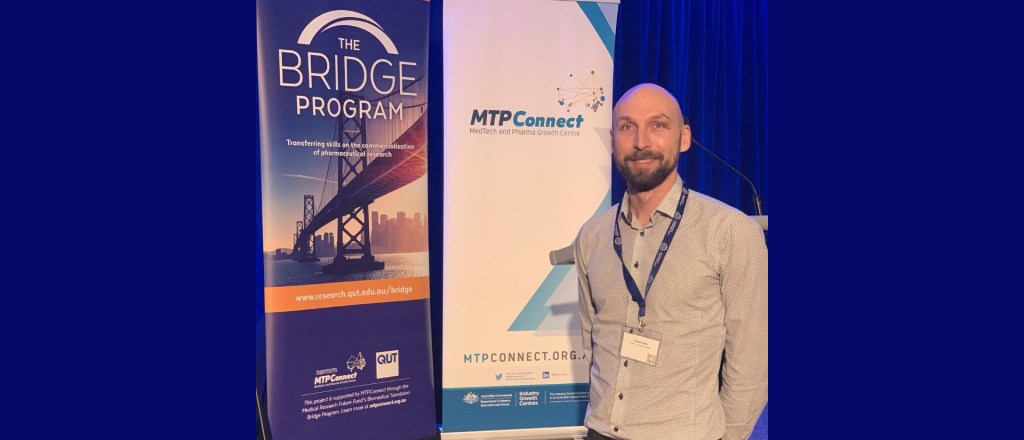
Congratulations to Centre Affiliate Dr David Hilko (Griffith Uni) on the award of a Bridge and BridgeTech Industry Fellowship Placement through the MTPConnect QUT (Queensland University of Technology) David will work on site with GRIDD’s industry partner A/Prof Rakesh N. Veedu founder of SynGenis, a Western Australian based company that works in the exciting oligonucleotide research space.

The Bridge and BridgeTech Industry Fellowship Placement

The Bridge and BridgeTech Industry Fellowships, facilitated by QUT and funded by MTPConnect’s Researcher Exchange and Development within Industry (REDI) initiative for the Australian Government’s Medical Research Future Fund, provide up to $10,000 to support the placement of participants and alumni of the Bridge Program and BridgeTech Program within industry. More on the program can be found here.

CFBD CI receives funding for cystic fibrosis research

CFBD CI Professor Ray Norton has been awarded a grant worth $49,000 from the Monash Health Foundation 65 km Walk for Cystic Fibrosis Research Funding for his project entitled “Validating a potential new target for the treatment of cystic fibrosis”.

Ray’s project seeks to determine whether the protein channel KV1.3 plays a role in airway inflammation in individuals with cystic fibrosis [CF]. Ray and his team will examine broncho-alveolar lavage [BAL] fluid obtained from both young children with CF and adults with CF following lung transplantation.

Previous research has shown that KV1.3 is involved in other inflammatory diseases such as rheumatoid arthritis and inflammatory bowel disease, but it is unknown if it is also important in CF lung disease or rejection in CF lung transplant recipients.

Lung inflammatory cells from BAL fluid will be tested for the presence of the KV1.3 channel. The group will also analyse BAL fluid from adults with CF post lung transplant, who will be having BAL as part of their routine post-transplant care at the Alfred Hospital Lung Transplant Service. We expect to find that KV1.3 is abundantly present in airway inflammatory cells in both patient groups.

If KV1.3 is detected, the next step will be to test whether blocking this channel with HsTX1[R14A], a novel peptide developed at Monash University, reduces inflammation and lung damage in animal models of CF lung disease and chronic rejection.

ARC Discovery Project Success

Congratulations to CFBD CI Professor Sally-Ann Poulsen from Griffith University for being awarded an ARC Discovery Project grant worth $415,495 together with Professor Katherine Andrews (Griffith Institute for Drug Discovery, Sciences). The project Chemical probes to dissect the cell cycle of globally important parasites aims to develop new reagents, called chemical probes, to visualise key biological events in globally important pathogens. The team will use innovative chemistry to modify the building blocks of DNA and provide researchers with essential tools to ‘see’ DNA synthesis in order to study growth and replication of pathogens in combination with microscopy. This project expects to support a major technical advance that will address important gaps in our understanding of many pathogens (e.g. those that cause malaria and tuberculosis), at both the cellular and molecular levels. This should provide significant benefits by enabling researchers worldwide to identify new intervention opportunities that target unique aspects of pathogen biology (with Dr Martin Blume, Robert Koch Institute).

Faculty Research Award for CI Professor Jonathan Baell

Congratulations to CFBD CI Professor Jonathan Baell for being awarded the Faculty Research Award from the Monash Institute of Pharmaceutical Sciences.

Jonathan discovers new medicines for treating diseases with unmet medical needs with a particular focus on cancer and infectious diseases. His track record is hallmarked by high-quality research outcomes in a variety of different areas, as exemplified by a broad and diverse suite of personally driven but widely collaborative patents integrated with subsequent high-quality publications.

With more than 70 granted patents, throughout his career Jonathan has been a driving force in facilitating commercial outcomes from academic research. At any given time, he incubates a variety of enterprising projects to maximise the chances of multiple translational outputs.

He is also the Director of the Australian Translational Medicinal Chemistry Facility (ATMCF), located at MIPS and which works with researchers nationwide in order to translate biomedical research outcomes. The Facility has secured over $7M in funding to enable the de-risking of projects through medicinal chemistry optimisation. In addition to the enterprise embodied in the ATMCF, Jonathan’s own patented KAT6A anticancer drug candidates have catalysed a global focus by Pharma on KATs as druggable targets. This innovative KAT6A work also has underpinned several awards, including Australia’s highest medicinal chemistry award, the Adrien Albert Award for Sustained Excellence in Medicinal Chemistry (2018), the Monash University Research Award for the Faculty of Pharmacy and Pharmacology (2019), the Scientific Achievement Award in Drug Discovery and Development (2020), awarded by the American Society for Pharmacology and Experimental Therapeutics, and in 2021 The Australian Academy of Technology and Engineering (ATSE) Clunies Ross Award for Knowledge Commercialisation.

Grant Success! CFBD CI Professor Joel Mackay to receive NHMRC Ideas Grant

Congratulations to CFBD CI Professor Joel Mackay from Sydney University who received an NHMRC Ideas Grant worth $829, 494.

New approaches to cancer treatment through mRNA display

This project will pioneer the development of a new class of molecules – cyclic peptides – that will block the activity of proteins that regulate gene expression and have been shown to be promising targets for a range of diseases, predominantly cancer. These molecules have the potential to be much more selective and potent than existing molecules and to also open up new directions for cancer therapy by allowing previously intractable molecular targets to be addressed.