How the Caribbean sea anemone can tackle autoimmune and neuroinflammatory diseases

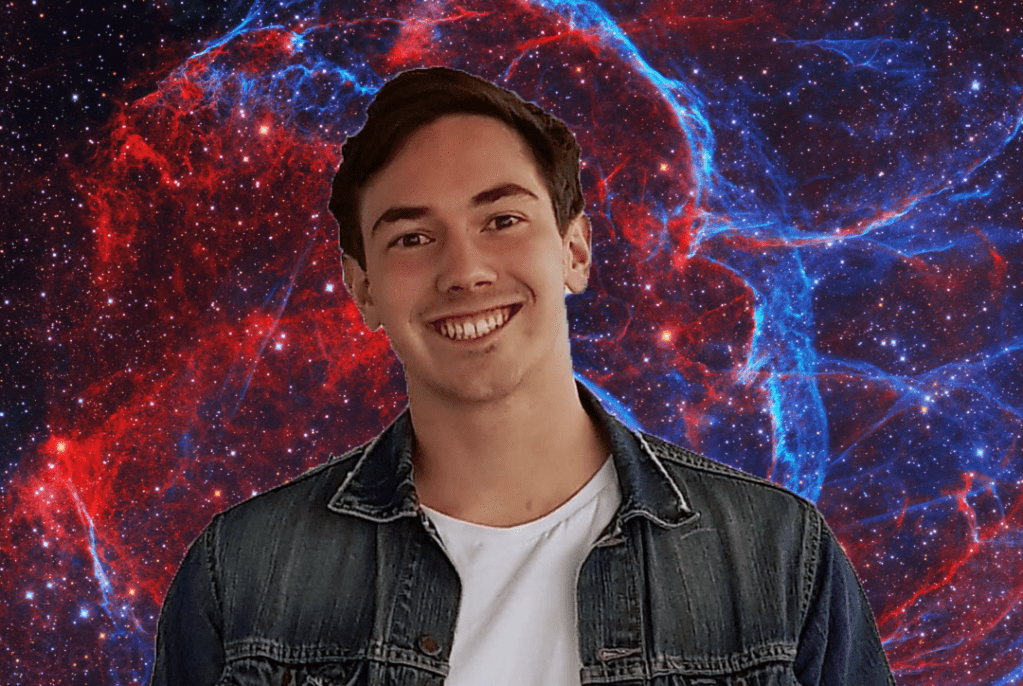
PhD candidate Karol Sanches recently published a paper in Proteins: Structure, Function, and Bioinformatics about the heterologous expression of the intrinsic membrane protein of the Caribbean sea anome.

The venoms of sea anemones are rich mixtures of biologically active compounds, some of which have the potential to be developed into novel therapeutics or bioinsecticides. ShK is a 35-residue peptide first isolated from the Caribbean sea anemone Stichodactyla helianthus as a potent blocker of voltage-gated potassium channels. The upregulation of one of these channels, KV1.3, occurs in many autoimmune and neuroinflammatory diseases, and inhibitors are therefore valuable molecular tools and potential therapeutic leads. The heterologous expression of this intrinsic membrane protein is one of the projects being pursued within the CFBD.

     Since its discovery in a sea anemone, the ShKT domain has been found in numerous other species, including plants, algae, protozoa, other cnidarians (such as hydra and jellyfish), sea urchins, molluscs, sea squirts, fish, nematodes, parasitic worms, snakes, amphibians, birds, and mammals. However, only a small fraction of these ShKT domains has been characterized functionally. Although some peptides display the same ShK-like fold and contain the dyad Lys-Tyr important for KV1.3 blockade, their function may not be related to potassium channel inhibition. As ShKT domains are highly abundant in nature and their functions are important to define, we investigated whether a combination of structure determination and/or prediction with molecular dynamics (MD) simulations could be useful for predicting activity against voltage-gated potassium channels. We show that weak or absent activity against KV1.x channels correlated with either a buried or only partially exposed dyad during MD simulations. We anticipate that structure determination in combination with MD simulations may allow the function of new sequences in the ShKT family to be predicted, at least for potassium channel blockers.

Full house at inaugural Hit ID Symposium

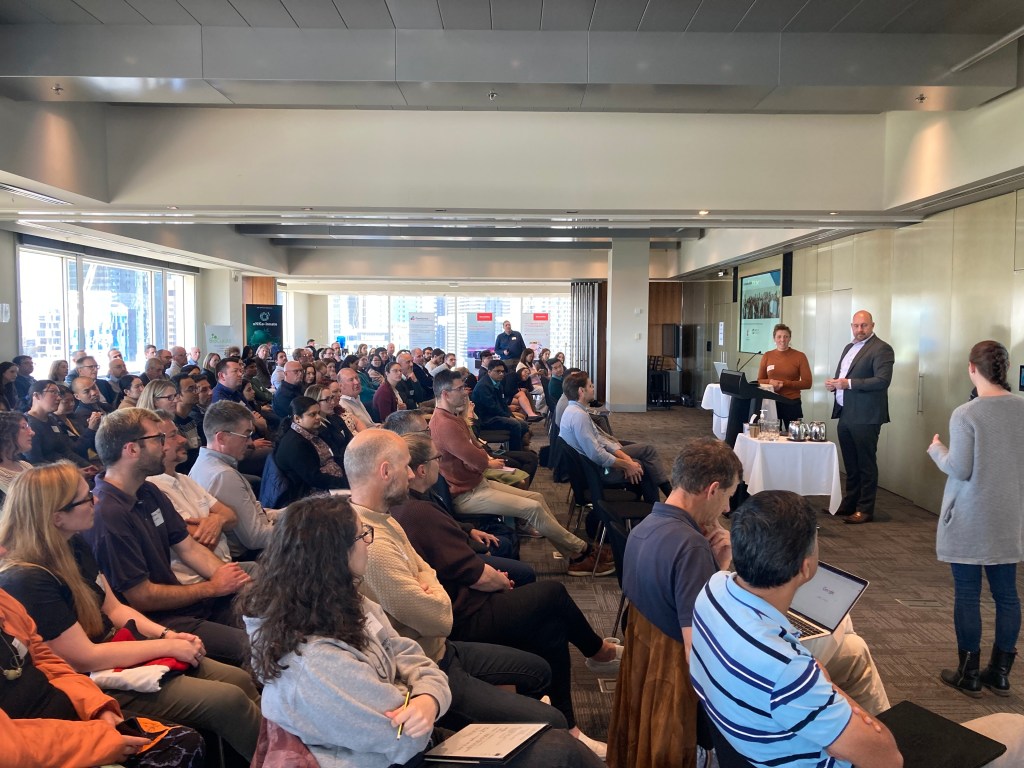
The Centre had the pleasure of supporting the inaugural Hit ID Symposium 2023 on 27 October. The sold-out event took place at the Woodward Conference Centre in Melbourne and consisted of scientific sessions, interactive events and networking opportunities focussed on introducing delegates to the topic of hit identification within a small molecule drug discovery setting. 

It was the first small molecule drug discovery symposium showcasing the hit identification infrastructure and success stories to come out of Melbourne’s Parkville precinct. The event provided a unique opportunity to support a wide-reaching symposium that focused on hit-finding screening campaigns in drug discovery, delivered by experts actively working in the field from both within academia and industry.

The symposium introduced researchers and clinicians to the topic of small molecule drug discovery and the support that is available to engage in such a program, starting with the identification of a hit. Attendees were guided through how to do drug discovery, how to fund it and how to protect it.

The event was supported by:

Funding Success for CFBD Director

CFBD Director Prof Martin Scanlon received funding through CSIRO’s CUREator – a national biotechnology incubator run by Brandon BioCatalyst to support the development of Australian biomedical research and innovations.

The project is led by Prof Bernie Flynn (Monash), Prof Colin Pouton (Monash) and CFBD Director Prof Martin Scanlon. The funding will support their aim to respond to the risk of viral and bacterial replication through the development of a platform capability in polynucleotide fragment based drug design (pFBDD) that is better able to discover small-molecules for targeting RNA and DNA.

CUREator is delivered through an initial $40m in funding from the Federal Government’s Medical Research Future Fund (MRFF) and $3m from Australia’s national science agency, CSIRO. CUREator was established by Brandon Capital in 2021 as a new approach for bridging the gap between where research grant funding ends and commercial investment begins.

How the venom of sea anemones can tackle Alzheimer’s and Parkinson’s

PhD student Karol Sanches (Monash node) recently published a paper titled “Interaction of the Inhibitory Peptides ShK and HmK with the Voltage-Gated Potassium Channel KV1.3: Role of Conformational Dynamics” in J. Chem. Inf. Model.

In her paper, she describes the effects of KV1.3 on diseases like Alzheimer’s and Parkinson’s. KV1.3 is a voltage-gated potassium channel found in the membrane of the cells. The upregulation of KV1.3 in T lymphocytes is related to many autoimmune diseases and, in microglia, in the brains of patients with Alzheimer’s and Parkinson’s diseases and ischemic stroke. The blockage of KV1.3 is an attractive mechanism for treating autoimmune and neuroinflammatory diseases. Indeed, several peptides found in the venom of sea anemones have proven to be potent blockers of KV1.3, including the ShK from Stichodactyla helianthus, and HmK from Heteractis magnifica, both inhibitors of the KV1.3 channel.

Mutagenesis analysis have shown that both peptides block KV1.3 through the Lys-Tyr dyad. Although ShK and HmK share 60% sequence identity by BLAST, ShK is nearly 300-fold more potent against KV1.3 than HmK. We used a combination of docking and molecular dynamics (MD) simulations to investigate the conformational dynamics in ShK and HmK and the implications of this flexibility for channel recognition. Besides sharing high sequence and structure identity, the dynamics of ShK and HmK differ. While HmK is highly rigid, ShK is dynamic, sampling three major configurations. Both peptides bind to KV1.3 with Lys22 occupying the channel’s pore; intriguingly, the more flexible peptide, ShK, binds with significantly higher affinity than HmK.

Find the full paper here.

Loving the industry life – Yildiz’s placement experience

Post written by Yildiz Tasdan, PhD Candidate at the CFBD Monash node

About four years ago, I was interviewed for the ITTC PhD Program on the day I submitted my Master’s thesis in Singapore. Now, I am in England doing my industry placement at Vernalis as part of my PhD at MIPS in Australia, and I have just returned from the US for a conference. I would not think a career in science would give me so many travelling opportunities. All these became possible thanks to the support from ARC CFBD.

My placement started at Vernalis, England four months ago, and I am absolutely loving the industry life. The first thing that surprised me here was how enthusiastic everyone is about research and training. I have been working on the synthesis of an extensive library of compounds using flow chemistry which provides excellent efficiency in the synthesis. I came here with no prior knowledge of flow chemistry. Thanks to the excellent training that my mentors provided, I am getting confident with my knowledge in the field and am willing to learn more. I am also learning about drug design and biophysics from the experts here. Everything I am learning here is in addition to the fundamental knowledge I gained in the first three years of my PhD at MIPS. The ITTC program prepared me for this placement very well, and ultimately it has been preparing me for an industry career.

CHI Drug Discovery Chemistry Conference Poster Presentation Award Ceremony (left to right; Anjani Shah, Yildiz Tasdan, An-Dinh Nguyen)

I was also fortunate to receive the CFBD travel grant to attend the CHI Drug Discovery Chemistry conference in San Diego. I had an opportunity to communicate my research with industry experts from various disciplines and expand my network. I attended two short courses and over 30 talks in 4 days, which was overall very fruitful. Through my poster presentation, I received the best poster prize as well.

I recommend every student and ECR follow the opportunities ARC CFBD offers and reach Anne to propose any training ideas and ask for additional support.

Thank you to Yildiz for writing this guest blog for CFBD and for sharing her experience with us!

Paper alert! Rapid Elaboration of Fragments into Leads (REFiL)

The challenge in fragment-based drug discovery (FBDD) is not finding hits, we typically find plenty, it’s what to do with them. In their recent publication, Centre members demonstrate a systematic approach for the Rapid Elaboration of Fragments into Leads (REFiL), where they take weak binding fragment hits and quickly develop them into higher affinity ligands that can be used as chemical probes or as starting points for a drug discovery program.

The paper was published in the Journal of Medicinal Chemistry by the following researchers and Centre members: Luke Adams, Lorna Wilkinson-White, Menachem Gunzburg, Stephen Headey, Biswaranjan Mohanty, Centre Director Martin Scanlon, Deputy Director Ben Capuano, Theme Leader Joel Mackay and Brad Doak.

Abstract

The development of low-affinity fragment hits into higher-affinity leads is a major hurdle in fragment-based drug design. Here, we demonstrate the Rapid Elaboration of Fragments into Leads (REFiL) by applying an integrated workflow that provides a systematic approach to generate higher-affinity binders without the need for structural information. The workflow involves the selection of commercial analogues of fragment hits to generate preliminary structure–activity relationships. This is followed by parallel microscale chemistry using chemoinformatically designed reagent libraries to rapidly explore chemical diversity. After a fragment screen against bromodomain-3 extra-terminal (BRD3-ET) domain, we applied the REFiL workflow, which allowed us to develop a series of ligands that bind to BRD3-ET. With REFiL, we were able to rapidly improve binding affinity > 30-fold. REFiL can be applied readily to a broad range of proteins without the need for a structure, allowing the efficient evolution of low-affinity fragments into higher-affinity leads and chemical probes.

CFBD Travel Grant 2023 – applications now open

CFBD researchers are again invited to apply for a CFBD Travel Grant to the value of up to $3,500. This grant may be used for travel to a national or international conference, a visit to a partner organisation for research collaboration or a visit to a research laboratory to learn a new technique. The CFBD TravelGrant is an annual award. 

Applications are open from 20 March to 21 April 2023 (COB). Please refer to the Eligibility Criteria and Application Form for further details.

International placements started

CFBD members Karol Sanches, Yildiz Tasdan and Jack Phelps (all Monash) have started their international placements as part of their ARC scholarships. While Karol has already completed her placement with TetraGenetics in Boston (USA), Yildiz and Jack are working at Vernalis in the UK. Here, Jack talks about his experience during his first couple of weeks:

“How time flies! It still feels like yesterday that I was saying goodbye to Melbourne and flying home to the UK to start my placement at Vernalis, Cambridge. I’ve now somehow been here for 3 months and am loving the experience of working in the industry. Of course, there are similarities (every day starts with coffee before setting up experiments), but also many notable differences. As expected (but slightly annoyingly) there’s a real sense that money, not discoveries themselves, is the driving force behind each project here, and when talking about my work it’s difficult to describe the end goal in terms of industry buyouts (which feels a long way off yet!). On a more personal note, the most exciting difference for me is on the technology side: All the columns are automatic and can be monitored remotely from your desk! Luckily, this is the case in protein purification too, as I’ve become much more of a biologist over the past couple of months. This brings me to the other major new experience in industry – not having to make up LB or wash/autoclave your own glassware! Call it laziness if you’d like, but I prefer to think of it as more time to spend doing the science… As well as protein science, I’ve also been fortunate enough to model protein sequences using AlphaFold and to start exploring crystallography.
All this being said though, I’m still missing the people at MIPS that kept me going during my PhD. With all the new helpful technicians and processes, there’s no substitute for the community of students and the city of Melbourne.”, Jack Phelps (Monash)

We will post more updates from Karol and Yildiz soon. Stay tuned! 

Congratulations to Dr Stefan Nebl

We are delighted to announce that Dr Stefan Nebl from the Scanlon group at Monash University has been conferred the award Doctor Of Philosophy on 8 December 2022. Congratulations, Stefan!

Stefan’s thesis is titled: NMR-Based Structural And Dynamic Characterization Of Bacterial Dsb Enzymes To Support Fragment-Based Drug Design, makes a distinct and significant contribution to knowledge.

We are very thrilled and can’t wait to hear about his future endeavours.

New paper out! CFBD alumna publishes work on fragment screening libraries

CFBD alumna Dr Rebecca Whitehouse published her paper “Fragment screening libraries for the identification of protein hot spots and their minimal binding pharmacophores” in RSC Medicinal Chemistry this week.

Abstract

Fragment-based drug design relies heavily on structural information for the elaboration and optimisation of hits. The ability to identify neighbouring binding hot spots, energetically favourable interactions and conserved binding motifs in protein structures through X-ray crystallography can inform the evolution of fragments into lead-like compounds through structure-based design. The composition of fragment libraries can be designed and curated to fit this purpose and herein, we describe and compare screening libraries containing compounds comprising between 2 and 18 heavy atoms. We evaluate the properties of the compounds in these libraries and assess their ability to probe protein surfaces for binding hot spots.